Why the Right Jeans Can Change Your Whole Outfit
There is a particular kind of frustration that happens in a fitting room. You pick up a pair of jeans that looked effortless on the rack, carry them in with quiet optimism, and then discover that they are too tight at the thigh, too loose at the waist, too long at the hem, or somehow all three at once.
Jeans are simple in theory. They are one of the most familiar pieces in everyday wardrobes. Yet finding a pair that truly fits can feel surprisingly personal. A good pair of jeans does more than cover the basics. It supports your shape, works with your proportions, moves with your day, and makes the rest of your outfit easier.
The key is not chasing the trendiest cut or forcing your body into a style that was designed for a different proportion. The key is learning how denim behaves, how different jean shapes affect the body visually, and which details matter most for your comfort and lifestyle.
This guide will help you choose jeans that fit your body type in a practical, thoughtful way. No unrealistic promises, no one-style-fits-all rules, and no pressure to dress for anyone else’s idea of what looks flattering. Just clear advice that helps you shop smarter.
Start With Fit, Not Trends
Trends can be fun, but they are not the foundation of a great denim wardrobe. One season may favor baggy jeans, another may bring back flares, and another may make straight-leg denim feel essential. The problem is that trends often focus on silhouette before fit.
Fit should always come first.
A pair of jeans should feel secure at the waist without digging in. It should allow you to sit, walk, bend, and move without constant adjusting. It should complement your proportions rather than fight them. When jeans fit properly, they become a reliable base for many outfits, from casual sneakers and a T-shirt to loafers, boots, and a tailored jacket.
Before looking at labels such as skinny, straight, relaxed, or wide-leg, pay attention to your own body structure. Where do jeans usually feel tight? Where do they feel loose? Do waistbands gap at the back? Do hems bunch at the ankle? Do thighs feel restricted? These small clues tell you more than a size tag ever will.
Understanding Your Natural Proportions
Body type is not about putting yourself into a strict category. It is simply a way to understand proportion. Two people can wear the same size but need completely different jeans because their waist, hips, thighs, torso, and leg length are different.
Start by looking at five areas.
Your waist tells you how much structure or stretch you may need in the waistband. Your hips and seat influence whether straight, curvy, relaxed, or contoured cuts may fit better. Your thighs affect how comfortable slim or skinny styles feel. Your torso length influences which rise feels most natural. Your height and inseam determine whether regular, petite, tall, cropped, or ankle lengths will work best.
The most useful approach is not asking, “What body type am I?” but rather, “Where do I need the jeans to support me, and where do I need more room?”
That question leads to better choices.
If You Have Fuller Hips or Thighs
If your hips or thighs are fuller compared with your waist, comfort and proportion are the main priorities. Jeans that fit the hips but gap at the waist are a common issue, especially when the waistband is cut too straight.
Look for styles with a contoured waistband, which is shaped to follow the curve between the waist and hips. Curvy-fit jeans can also be helpful because they often offer more room through the hip and thigh while keeping the waist more secure.
Straight-leg jeans are often a reliable choice because they skim the body without clinging too tightly. Bootcut jeans can also create visual balance by adding a slight opening at the hem. Wide-leg jeans may work beautifully when the waist fits well and the fabric drapes cleanly rather than pulling across the hips.
Avoid assuming that stretch alone will solve the fit. Stretch can improve comfort, but if the cut is not right, the jeans may still pull, wrinkle, or slide down during the day.
If You Carry More Around the Midsection
If you tend to carry more around the stomach or prefer not to feel compressed at the waist, rise and waistband design become especially important.
Mid-rise jeans are often a comfortable middle ground because they sit around the natural waist area without coming too high. High-rise jeans can also work well if the waistband is soft, structured, and not overly tight. The goal is support, not squeezing.
Look for denim with moderate stretch and good recovery. Recovery means the fabric returns to shape after movement. Jeans that stretch out too quickly may feel comfortable at first but become loose after a few hours.
A straight-leg, relaxed straight, or slim-straight style can create a clean line without drawing too much attention to the midsection. Darker washes and minimal front details may also create a smoother appearance.
The biggest mistake is choosing jeans that are too small because you expect them to “hold everything in.” If the waistband cuts in while standing, it will usually feel worse when sitting.
If Your Shape Is Straighter
If your waist, hips, and shoulders are more similar in width, you may want jeans that add shape or definition. This does not mean you need to create curves unless you want to. It simply means certain cuts can add dimension to your outfit.
High-rise jeans can define the waist visually. Tapered, slim-straight, and vintage-inspired straight jeans can add structure without overwhelming the frame. Jeans with back pockets placed slightly higher can also create a lifted appearance.
If you like a more sculpted look, consider jeans with a defined waistband and a little stretch. If you prefer a relaxed look, loose straight-leg or barrel-leg styles can add fashion-forward volume while still feeling intentional.
Wash also matters. Fading, whiskering, and pocket placement can create visual shape. Clean dark washes look sharper, while lighter washes often feel more casual and dimensional.
If You Are Petite
Petite shoppers often face one major problem: proportions. Jeans that are designed for a taller frame may have knees, fading, pockets, or hems in the wrong place.
A high-rise or mid-rise jean can help visually lengthen the legs, especially when paired with a tucked-in top or cropped sweater. Straight-leg, slim-straight, and ankle-length jeans are often easier to style because they do not swallow the frame.
Pay close attention to inseam. A “regular” crop on a taller person may become full length on a petite frame. That is not necessarily bad, but it changes the intended look. Petite-specific jeans are worth considering because the rise, knee placement, and length are adjusted more carefully.
Avoid heavy bunching at the ankle if you want a cleaner silhouette. A small cuff can look stylish, but too much extra fabric may make the jeans appear borrowed rather than tailored.
If You Are Tall
Tall shoppers often need more than just extra length. Rise and proportion matter too. A pair of jeans may be long enough at the hem but still feel too short in the rise, making the fit uncomfortable.
Tall sizes can help because they often adjust both inseam and overall proportions. Straight-leg, wide-leg, flare, and relaxed cuts can look especially balanced on taller frames because there is enough length to carry the silhouette.
If you like cropped jeans, make sure the crop looks intentional. A hem that hits awkwardly above the ankle may feel accidental. For full-length styles, check that the jeans reach the right point for the shoes you wear most often.
Wide-leg jeans can be a strong option because they create elegant movement. Just make sure the waistband fits securely so the shape looks polished rather than oversized by default.
If You Have Curves
For curvier proportions, the most common denim issue is waist gap. The jeans fit through the hips and seat but leave extra space at the back of the waistband. This usually means the jean is not cut with enough curve between the waist and hip.
Curvy-fit jeans, contour waistbands, and fabrics with controlled stretch can make a noticeable difference. Look for jeans that feel snug but not strained through the seat and thigh. A small amount of stretch helps with comfort, while good recovery keeps the jeans from sagging.
Straight-leg, bootcut, flare, and wide-leg jeans can all work well, depending on the look you want. The best choice is less about hiding curves and more about supporting them properly.
Pocket placement is also important. Back pockets that are too low or too far apart can change the visual proportion of the seat. Well-placed pockets can make jeans look more tailored and balanced.
Choosing the Right Rise
Rise is one of the most important denim details because it determines where the waistband sits on your body.
High-rise jeans sit at or above the natural waist. They can define the waist, lengthen the leg line, and work well with tucked tops or cropped layers. They are especially popular because they create a structured silhouette, but they are not automatically comfortable for everyone.
Mid-rise jeans sit lower than high-rise but higher than low-rise. They are often the most versatile option for daily wear because they balance coverage and comfort. If high-rise jeans feel restrictive when you sit, mid-rise may be a better choice.
Low-rise jeans sit below the natural waist. They can suit certain proportions and personal styles, especially if you prefer a relaxed early-2000s look. However, they can require more adjusting and may not feel as secure for all-day wear.
The right rise is the one that feels natural on your torso. When trying jeans, sit down before deciding. A rise that looks perfect while standing may feel uncomfortable in real life.
Choosing the Right Leg Shape
Jean leg shape changes the entire mood of an outfit.
Skinny jeans fit close from hip to ankle. They work well tucked into boots and can create a sleek base, but they should not feel restrictive.
Slim jeans are slightly less fitted than skinny jeans. They offer a tailored look without clinging as tightly.
Straight-leg jeans fall in a relatively even line from hip or thigh to hem. They are one of the most versatile choices because they work across many body types and style preferences.
Bootcut jeans slightly widen from the knee down. They can balance fuller hips or thighs and pair naturally with boots.
Flare jeans have a more dramatic opening at the hem. They can visually lengthen the legs, especially with heeled shoes or platform soles.
Wide-leg jeans offer room through the leg and can look polished when the fabric has enough structure. They are comfortable, modern, and especially useful for creating an easy editorial silhouette.
Relaxed jeans provide more room through the seat and thigh. They are ideal for casual wardrobes and shoppers who prioritize comfort.
Instead of asking which shape is most flattering, ask which shape supports your wardrobe. If you wear sneakers daily, straight or relaxed jeans may be practical. If you love boots, bootcut or slim jeans may work harder for you. If you prefer polished outfits, dark straight-leg or wide-leg jeans may be the easiest foundation.
Fabric Matters More Than You Think
Two pairs of jeans can have the same size and shape but feel completely different because of fabric.
Rigid denim, usually made with little or no stretch, has structure and often softens over time. It can look crisp and classic, but it may require a break-in period.
Stretch denim includes fibers that allow movement. It is often more comfortable from the first wear, especially for sitting, commuting, or active days. The key is choosing stretch denim with recovery, so it does not lose shape quickly.
Lightweight denim feels softer and easier to wear in warmer weather, but it may show lines or stretch out faster. Heavier denim tends to hold structure better but may feel less flexible.
For everyday jeans, many shoppers prefer a balance: enough cotton for structure, enough stretch for comfort, and enough recovery to keep the fit consistent.
Color and Wash Can Change the Look
Wash is not just a style choice. It changes how jeans visually shape the body and how formal or casual they feel.
Dark-wash jeans look clean, classic, and slightly dressier. They are useful for smart-casual outfits and often create a longer, smoother line.
Medium-wash jeans are the everyday standard. They feel relaxed without being too faded and pair easily with most tops and shoes.
Light-wash jeans feel casual, fresh, and laid-back. They are great for daytime outfits but can draw more attention to the leg shape.
Black jeans are versatile and polished. They can replace trousers in many casual outfits and are easy to style with jackets, knits, and boots.
Faded or distressed jeans add personality, but they are less versatile. If you are building a practical denim wardrobe, start with a clean wash first, then add trend-driven pairs later.
How Jeans Should Fit When You Try Them On
A good fit begins at the waist. The waistband should feel secure without digging in. You should be able to sit comfortably without the jeans cutting into your stomach or sliding down.
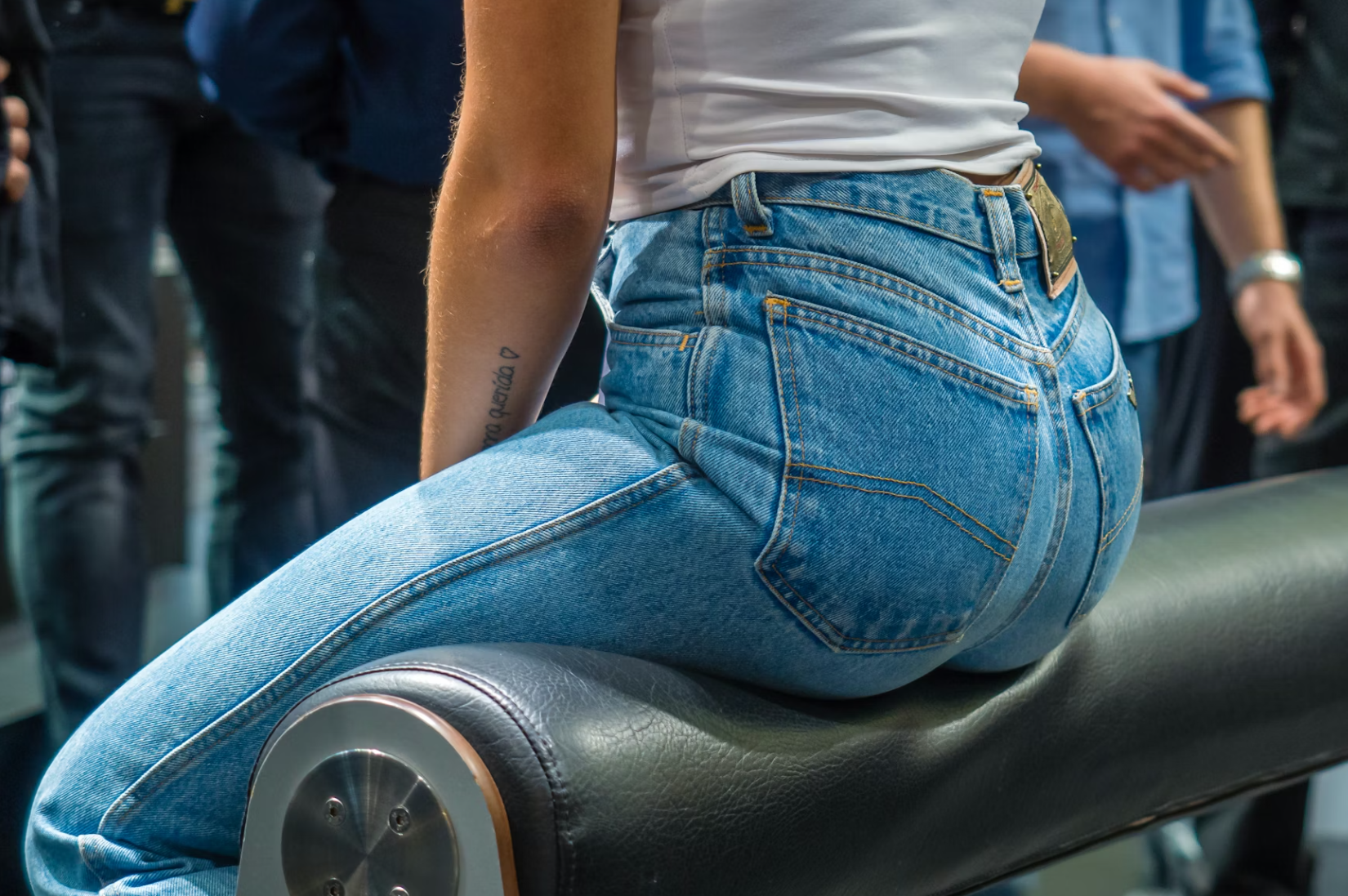
At the seat, the fabric should follow the body without excessive pulling, sagging, or flattening. Some wrinkles are normal, but strong horizontal pulling usually means the jeans are too tight.
Through the thigh, you should be able to walk and sit naturally. If the fabric twists, pulls, or feels restrictive, try a different cut rather than only sizing up.
At the knee, check where the bend naturally falls. This matters especially for petite and tall shoppers because misplaced knee shaping can make jeans look slightly off.
At the hem, think about shoes. Jeans that work with sneakers may not work with boots or heels. If possible, try jeans with the type of footwear you plan to wear most.
Common Mistakes to Avoid
One common mistake is buying jeans that only fit while standing. Real life involves sitting, walking, bending, driving, and moving. Always test movement before deciding.
Another mistake is focusing too much on the size number. Denim sizing varies widely by brand, fabric, and cut. A larger size that fits well will look better than a smaller size that pulls.
Many shoppers also overestimate how much jeans will stretch. Some denim relaxes slightly, but a painful waistband or tight thigh usually will not become magically perfect.
Choosing trends over lifestyle is another issue. If you rarely wear heels, extra-long flares may not be practical. If you walk a lot, stiff rigid denim may not be ideal for daily wear.
Finally, do not ignore tailoring. Hemming jeans can make an affordable pair look much more refined. A simple length adjustment can completely change the silhouette.
Smart Buying Tips Before You Decide
Before buying jeans, think about your wardrobe honestly. What tops do you wear most? What shoes do you reach for daily? Do you need jeans for casual errands, office-friendly outfits, weekends, travel, or evenings out?
Read product details carefully. Look for inseam, rise, fabric composition, stretch level, and fit notes. If reviews mention waist gap, tight thighs, or stretching out, those comments can be useful signals.
When comparing options, consider building a small denim wardrobe rather than searching for one perfect pair. A dark straight-leg jean, a relaxed everyday pair, and a seasonal trend cut may cover more outfits than one pair trying to do everything.
If shopping online, check the return policy before ordering. Denim is highly personal, and even careful measurements cannot guarantee the right feel. When possible, order two nearby sizes and compare fit through movement.
The Best Jeans Are the Ones You Actually Wear
The best jeans for your body type are not necessarily the trendiest, tightest, most expensive, or most dramatic. They are the jeans you reach for without hesitation.
A good pair makes getting dressed simpler. It gives shape without discomfort, structure without stiffness, and style without effort. It works with your proportions instead of demanding that you adjust yourself to the garment.
Choosing jeans becomes much easier when you stop treating your body as the problem and start treating fit as the puzzle. Every body has its own proportions. The right denim simply respects them.
Conclusion
Finding jeans that fit your body type is part measurement, part observation, and part personal preference. Start with how jeans feel at the waist, hips, thighs, rise, and length. Then consider leg shape, fabric, wash, and the way each pair fits into your real wardrobe.
The most useful pair is the one that supports your daily life while making you feel composed and comfortable. When denim fits well, it does not need to shout. It simply works.
Frequently Asked Questions
What type of jeans is most flattering for most body types?
Straight-leg jeans are often the most versatile because they create a clean line without being too tight or too loose. However, the most flattering option depends on your proportions, comfort preferences, and the shoes and tops you wear most often.
Are high-rise jeans better for curves?
High-rise jeans can work well for curves, especially when they have a contoured waistband and enough room through the hips and seat. However, rise is personal. Some curvy shoppers prefer mid-rise jeans because they feel more comfortable when sitting.
How do I know if jeans are too tight?
Jeans may be too tight if the waistband digs in, the fabric pulls strongly across the hips or thighs, sitting feels uncomfortable, or the seams twist. A close fit is fine, but restriction is a sign to try another size or cut.
Should jeans feel tight when you first buy them?
Some rigid denim may feel snug at first and soften with wear, but jeans should not feel painful or overly restrictive. Stretch denim should feel comfortable from the beginning, while still holding its shape.
What is the best jean style for a polished everyday wardrobe?
Dark straight-leg, slim-straight, or clean wide-leg jeans are strong choices for a polished everyday wardrobe. They pair easily with sweaters, shirts, blazers, flats, boots, and sneakers without looking too trend-specific.

You May Also Like
Fashion Basics vs Trend Pieces: What Should You Buy First?

The Quiet Luxury of Feeling Comfortable