Yoga Equipment for Beginners: What Do You Really Need?
Starting yoga can feel beautifully simple at first. You imagine a quiet room, a calm breath, a few gentle stretches, and a moment of peace carved out of an otherwise busy day. Then you search for beginner yoga equipment and suddenly the simplicity disappears. Mats, blocks, straps, bolsters, wheels, towels, blankets, socks, cushions, bags, sprays, and sets appear everywhere, each promising to make your practice easier, deeper, cleaner, or more stylish.
The good news is that yoga does not need to begin with a full shopping list. In fact, one of the most appealing things about yoga is how little it requires. You can start with your body, your breath, a little floor space, and a willingness to move at your own pace. Equipment can help, but it should support your practice rather than complicate it.
For beginners, the smartest approach is not to buy everything at once. It is to understand what each item actually does, which pieces are genuinely useful, and which ones can wait until you know your practice better. A thoughtful yoga setup should feel like a small invitation, not a storage problem.
This guide walks through the yoga equipment beginners really need, what is optional, what to avoid buying too soon, and how to choose pieces that make practice more comfortable, safe, and sustainable.
The First Rule: Start Simple
Before thinking about gear, it helps to remember what yoga equipment is meant to do. It should improve comfort, support alignment, reduce slipping, make poses more accessible, or create a more pleasant practice environment. It is not there to make yoga look impressive.
A beginner does not need professional studio-level equipment on day one. Many people start with a basic mat and comfortable clothing, then add props later as they discover what their body needs. Someone with tight hamstrings may appreciate a strap early. Someone practicing restorative yoga may love a bolster. Someone doing mostly short online flows at home may only need a dependable mat.
Starting simple also helps you avoid buying items based on a fantasy version of your routine. It is easy to imagine a perfect morning practice with matching accessories and a serene corner of the room. But your real yoga routine may become something more practical: twenty minutes after work, a short stretch before bed, or a weekend class at a local studio. Let your actual habits guide your purchases.
A Good Yoga Mat Is the Most Useful Starting Point
If there is one piece of yoga equipment worth considering first, it is a yoga mat. A mat gives you a defined practice space, adds cushioning between your body and the floor, and provides traction so your hands and feet feel more stable.
For beginners, the best yoga mat is not necessarily the most expensive one. It should be comfortable, grippy enough for your style of practice, easy to clean, and not so heavy that you avoid using it.
Thickness is one of the first things to consider. A thinner mat often feels more stable for standing poses because you can sense the floor beneath you. A thicker mat can feel kinder on knees, wrists, and hips, especially for slower practices or people practicing on hard floors. Many beginners do well with a medium-thickness mat because it offers a balance of comfort and stability.
Texture matters too. A smooth mat may look elegant, but it can become slippery during more active flows. A textured mat may offer better grip, though some people find heavy texture uncomfortable under their hands. If you tend to sweat easily, grip should be a higher priority.
Material is also worth considering. Some mats are designed to be lightweight and affordable, while others focus on durability, cushioning, or eco-conscious materials. There is no single right answer. Think about where you will practice, how often you will use the mat, how much cushioning you want, and whether easy cleaning is important to you.
The mistake to avoid is choosing a mat purely because it looks beautiful. A pretty mat that slips, curls at the edges, smells strongly, or feels uncomfortable will not encourage consistent practice. Choose function first, style second.
Comfortable Clothing Matters More Than Yoga-Specific Outfits
You do not need a wardrobe of yoga outfits to start practicing. What you need is clothing that allows you to move comfortably without constant adjusting.
For tops, choose something breathable and not too loose. Very baggy shirts can slide up during forward folds or downward-facing dog, which can become distracting. A fitted or semi-fitted T-shirt, tank top, or long-sleeve athletic top usually works well.
For bottoms, leggings, joggers, bike shorts, or flexible athletic pants can all be suitable. The key is stretch and comfort. You should be able to bend, lunge, sit, and twist without feeling restricted. Avoid pants with stiff waistbands, heavy zippers, or fabric that becomes see-through when stretched.
Yoga is usually practiced barefoot, so special shoes are not needed. Socks can be worn for warmth during gentle stretching or relaxation, but regular socks may slip during standing poses. Grip socks can be useful in studios or for people who dislike bare feet, but they are optional for most beginners.
It is also worth thinking about comfort beyond appearance. If you are constantly pulling at your waistband or worrying about fabric moving out of place, your attention moves away from your breath and body. Good beginner yoga clothing should quietly disappear into the background.
Yoga Blocks Make Poses More Accessible
Yoga blocks are among the most beginner-friendly props. They are simple, affordable, and surprisingly versatile. A block brings the floor closer to you, which can make many poses more comfortable and better aligned.
For example, in a standing forward fold, placing your hands on blocks can reduce strain if your hands do not comfortably reach the floor. In triangle pose, a block can support the lower hand so you are not collapsing into the pose. In seated positions, sitting on a block can help lift the hips and make the spine feel more upright.
This is especially helpful for beginners who assume flexibility is required for yoga. It is not. Props are not signs of weakness; they are tools for making poses fit your body. A block can help you experience a pose with more ease instead of forcing your way into a shape.
Blocks usually come in foam, cork, or wood. Foam blocks are lightweight and softer, making them comfortable for beginners. Cork blocks feel firmer and more stable, while wood blocks are very sturdy but less forgiving. Most beginners will be happy with one or two foam or cork blocks.
If you are practicing at home and want to keep things minimal, two blocks are more useful than one because many poses benefit from support on both sides. However, if you are only testing the waters, one block is still a practical start.
A Yoga Strap Helps With Flexibility Without Forcing
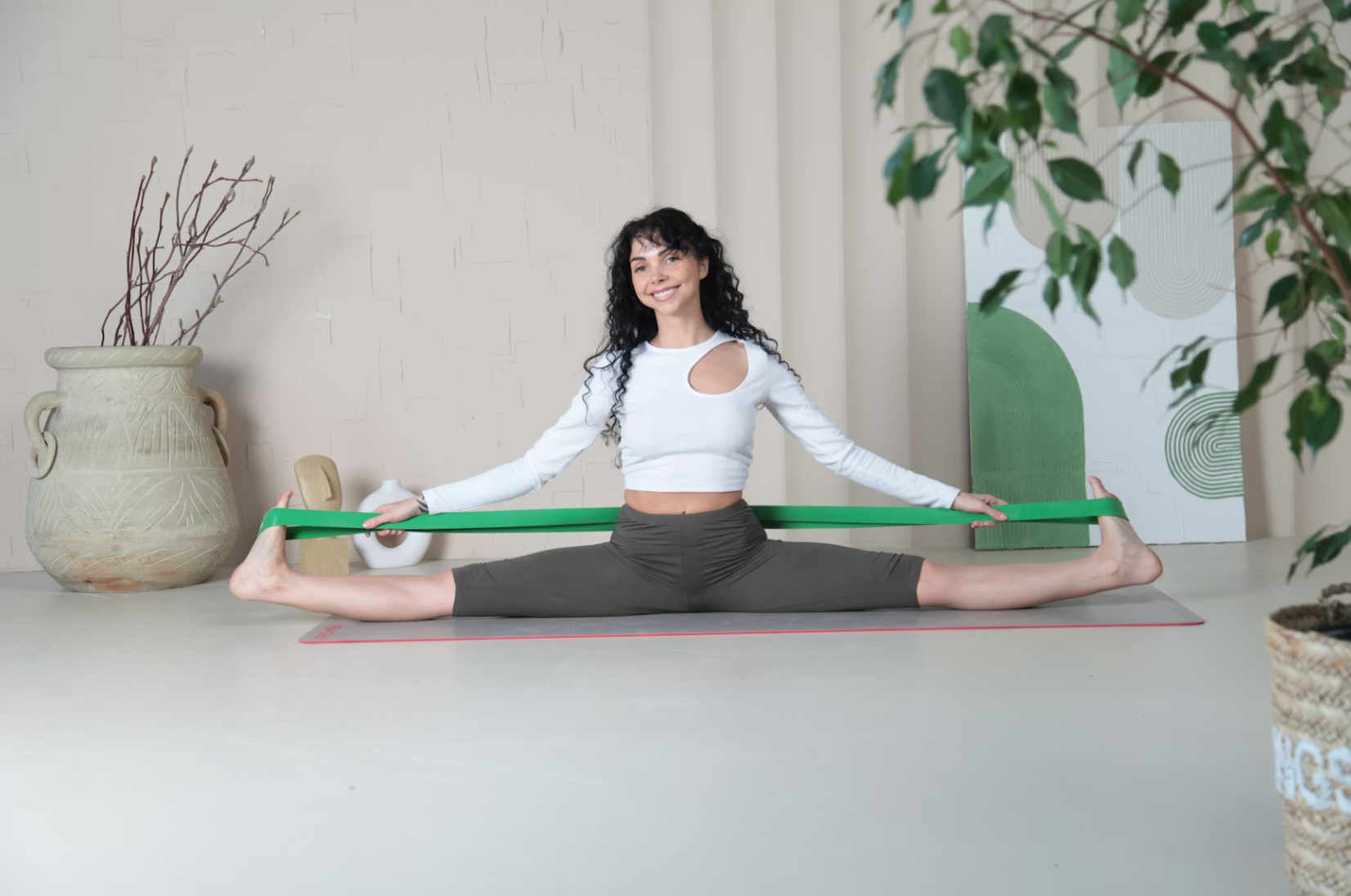
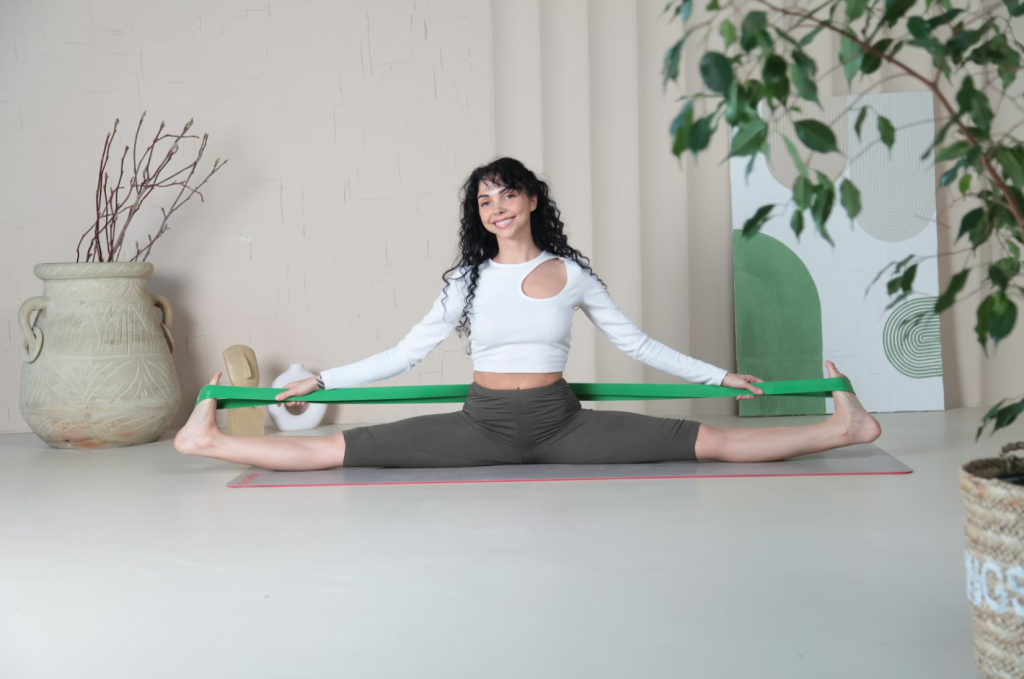
A yoga strap is another useful beginner prop, especially if you have tight shoulders, hamstrings, hips, or lower back tension. It acts like an extension of your arms, helping you reach without straining.
In seated forward folds, a strap around the feet can help you maintain a longer spine instead of rounding aggressively just to grab your toes. In reclining leg stretches, a strap allows you to lift and hold one leg comfortably without pulling behind the knee or gripping awkwardly. For shoulder mobility work, a strap can help you explore range of motion with more control.
The main benefit of a strap is that it encourages patience. Beginners often try to stretch by pulling harder, but yoga works better when the body is given time and space. A strap helps you support the stretch rather than chase it.
Most basic yoga straps are simple cotton or polyester bands with a buckle or loop. You do not need anything complicated. Length can matter if you are tall or want more versatility, but a standard strap works for many people.
If you do not want to buy a strap immediately, you can use a long towel, belt, or scarf for some poses. Just make sure it is sturdy and comfortable to hold.
A Blanket Is More Useful Than It Looks
A yoga blanket may seem optional, but it can be one of the most practical items for home practice. It provides cushioning, warmth, height, and support in a way that feels gentle and adaptable.
Folded under the knees, a blanket can make kneeling poses more comfortable. Under the hips in seated poses, it can help tilt the pelvis slightly forward and reduce lower back rounding. During relaxation, it can keep the body warm as your temperature drops. In restorative poses, it can be rolled or folded to support the spine, neck, or legs.
The best part is that you may not need to buy a special yoga blanket at first. A firm household blanket, large towel, or folded throw can work well. The only caution is that very fluffy blankets may compress too much and provide less stable support.
For beginners practicing at home, a blanket is a low-pressure addition. It does not feel like technical gear, yet it can make practice more comfortable almost immediately.
Bolsters Are Wonderful, But Not Essential at First
A yoga bolster is a firm cushion used for support, especially in restorative yoga, gentle stretching, prenatal yoga, and relaxation practices. It can support the spine in reclined poses, lift the knees during rest, or make seated forward folds feel softer.
Bolsters can be lovely, but they are not essential for every beginner. If your practice is mostly active flow, strength-based movement, or short stretching sessions, you may not use one often. If you are drawn to slow, relaxing, nervous-system-friendly yoga, a bolster may become one of your favorite pieces of equipment.
Before buying one, consider your space and practice style. Bolsters take up more room than blocks or straps. They can also vary in firmness and shape. Rectangular bolsters feel stable and structured, while round bolsters create a slightly deeper opening in some reclined poses.
A practical beginner approach is to try using pillows or folded blankets first. If you find yourself constantly building pillow stacks for support, that is a good sign a bolster may be worth it.
Yoga Towels Are Helpful for Sweat, Not Required for Everyone
A yoga towel is designed to absorb sweat and add a layer between you and your mat. It can be useful for hot yoga, vigorous flow classes, or anyone whose hands and feet become slippery during practice.
For a calm beginner routine at home, a yoga towel may not be necessary. A small hand towel nearby can be enough. If you plan to attend heated studio classes, however, a full mat towel may be helpful for hygiene and grip.
The important distinction is between need and nice-to-have. If you are slipping because of sweat, a towel can improve safety and confidence. If you are not sweating much, it may simply become one more item to wash.
Mat Cleaners and Hygiene Basics
Yoga mats touch hands, feet, floors, and sometimes shared studio spaces, so cleaning matters. That does not mean you need a luxury mat spray right away.
For many mats, a gentle wipe-down after practice is enough. Always check the care instructions for your specific mat, because materials vary. Some tolerate mild soap and water, while others need more careful cleaning. Avoid harsh chemicals unless the mat manufacturer says they are safe, as they may damage the surface or leave residue.
If you practice at home a few times a week, a simple cleaning routine can keep your mat fresh. Let it dry fully before rolling it up. Storing a damp mat can create odor and shorten its lifespan.
A mat cleaner can be convenient, especially if you practice often or carry your mat to public classes. But like many yoga accessories, it is a convenience item rather than a requirement.
What You Probably Do Not Need as a Beginner
Some yoga products are appealing but unnecessary at the start. A yoga wheel, for example, can support backbends and mobility work, but it is not essential for foundational practice. It may even feel intimidating if you are still learning basic alignment.
Meditation cushions can be useful if you plan to sit for longer periods, but beginners can often start with a folded blanket or firm pillow. Sandbags, eye pillows, and specialty props can add comfort to restorative practice, but they are best purchased after you know you enjoy that style.
Expensive mat bags are also optional. If you travel to classes, a simple carrying strap may be enough. If you practice at home, you may not need a carrier at all.
Matching sets can look attractive, but they are not always the smartest purchase. A set may include items you rarely use, and the quality may not be equal across all pieces. It is often better to buy fewer items thoughtfully than to buy a large bundle that mostly sits in a corner.
How to Choose Yoga Equipment Based on Your Practice Style
The right equipment depends heavily on how you plan to practice.
If you are doing beginner yoga at home with online videos, start with a mat, comfortable clothing, and perhaps two blocks. Add a strap if flexibility work feels challenging. A blanket is useful if you do slower sessions or want more comfort during floor poses.
If you are joining studio classes, a mat may still be worth owning, though some studios provide rentals. You may also want a towel and a simple mat strap or bag. Check whether the studio supplies blocks, straps, and bolsters before buying your own.
If you are interested in gentle or restorative yoga, props become more important. Blocks, blankets, and bolsters can help the body relax into supported positions. In this style, comfort is not decorative; it is part of the practice.
If your goal is mobility and stretching, a strap and blocks may be more useful than extra accessories. If your goal is strength and active flow, mat grip and stability should be the priority.
Thinking about your practice style helps you avoid the common beginner trap of buying gear for someone else’s routine.
Common Mistakes Beginners Make When Buying Yoga Gear
One common mistake is buying too much too soon. New motivation can make a full equipment set feel like a commitment, but it can also create pressure. Yoga should feel welcoming, not like a hobby with a high entry fee.
Another mistake is choosing the cheapest mat without considering grip or comfort. A low-cost mat can be perfectly fine, but if it slips constantly or wears out quickly, it may not be good value.
Some beginners also buy based on appearance alone. Soft colors and beautiful designs can make practice feel inviting, but performance matters more. A mat or prop should be pleasant to use, not just pleasant to photograph.
It is also easy to assume that advanced props will speed up progress. They will not replace consistency, patience, and good instruction. A yoga wheel will not matter much if you have not built awareness in basic poses. A premium mat will not create a routine by itself.
Finally, many people ignore storage. If your yoga gear is difficult to access, you are less likely to use it. A mat rolled neatly in a visible corner may encourage more practice than a perfect setup hidden in a closet.
A Smart Beginner Yoga Equipment Checklist
For most beginners, a practical starting list looks like this: a comfortable yoga mat, clothing that moves with you, and enough space to practice safely. That is the true foundation.
The next useful additions are two yoga blocks and a strap. These help make poses more accessible and reduce the temptation to force flexibility. A blanket is also highly useful, especially for seated poses, knee support, and relaxation.
After that, consider your personal needs. Add a towel if you sweat a lot or attend hot classes. Add a bolster if you love restorative yoga. Add a mat bag if you travel to classes regularly. Add specialty items only when your practice gives you a clear reason.
This approach keeps your setup flexible, affordable, and focused on real use. You are not building a display. You are building a practice.
What Matters Most Is Consistency
The most valuable yoga equipment is the equipment that helps you return to the mat. Sometimes that means a grippy mat that makes you feel secure. Sometimes it means a block that allows you to relax your shoulders instead of straining. Sometimes it means a blanket that makes a five-minute evening stretch feel inviting.
Yoga is not about having the most beautiful setup or the most complete collection of props. It is about creating a relationship with your body over time. Equipment can make that relationship more comfortable, but it should never become the main event.
As a beginner, give yourself permission to start modestly. Notice what feels difficult, what feels supportive, and what kind of practice you naturally enjoy. Your needs will become clearer with experience.
Conclusion
Beginner yoga equipment does not need to be complicated. A good mat, comfortable clothing, and a little open space are enough to begin. From there, blocks, a strap, and a blanket can make your practice more accessible, comfortable, and sustainable. Items like bolsters, towels, cushions, and specialty props can be useful later, depending on your practice style.
The smartest way to shop is to buy slowly and intentionally. Choose tools that solve real problems, not products that simply make yoga look more polished. When your equipment supports comfort, confidence, and consistency, it is doing its job. The rest is breath, patience, and showing up.
Frequently Asked Questions
Do beginners really need a yoga mat?
A yoga mat is the most useful piece of beginner yoga equipment because it provides cushioning, grip, and a defined space for practice. You can technically practice on a carpet or rug, but a mat usually feels more stable and supportive, especially for standing poses and floor work.
Are yoga blocks necessary for beginners?
Yoga blocks are not strictly necessary, but they are highly helpful. They make poses more accessible by bringing the floor closer and supporting better alignment. Beginners who feel tight, unstable, or uncomfortable in certain poses may benefit from using blocks early.
What should I wear for beginner yoga?
Wear comfortable clothing that stretches easily and stays in place as you move. You do not need a special yoga outfit. A breathable top and flexible leggings, shorts, or joggers can work well. Avoid clothing that feels restrictive, slippery, or distracting.
Is a yoga strap worth buying?
A yoga strap is worth considering if you have tight hamstrings, shoulders, or hips. It helps you stretch with control instead of forcing your body into positions. Beginners can also use a towel, belt, or scarf as a temporary alternative.
What yoga equipment should I avoid buying at first?
Most beginners can wait before buying yoga wheels, sandbags, eye pillows, expensive mat bags, and large prop sets. These items can be useful for specific styles of practice, but they are not essential when you are just starting. It is better to begin with basics and add equipment as your routine develops.

You May Also Like
How to Choose Fitness Products That Match Your Goals
Running Shoes vs Training Shoes: What Is the Difference?