Home Workout Essentials for Beginners: A Practical Guide to Starting Strong
Starting a home workout routine sounds simple until you actually begin. You clear a corner of the living room, roll out an old towel, open a fitness video, and suddenly realize you are not quite sure what you need, what is optional, and what might end up collecting dust in a closet. The good news is that a beginner home gym does not need to look like a professional training studio. In fact, the best setup is often small, flexible, and built around the way you actually live.
Home workout essentials for beginners are less about buying everything at once and more about choosing a few reliable tools that support consistency. A good mat, a pair of supportive shoes, simple resistance equipment, and a clear plan can do more for your progress than a room full of complicated machines. The goal is to create a space that feels easy to use, safe to move in, and welcoming enough that you return to it tomorrow.
This guide walks through the most useful beginner-friendly workout essentials, explains what matters when shopping, and helps you avoid common mistakes. Whether your goal is general fitness, strength, mobility, weight management, better energy, or simply building a healthier routine, the right basics can make home exercise feel less intimidating and much more sustainable.

Why a Simple Home Workout Setup Works Best
When you are new to exercise, simplicity is an advantage. A crowded workout area can feel motivating at first, but too many tools can also create confusion. You may spend more time deciding what to use than actually moving. Beginners usually benefit from a setup that supports a few core training styles: bodyweight exercise, light strength training, stretching, and low-impact cardio.
A simple setup also lowers the barrier to starting. If your mat is nearby, your resistance bands are easy to reach, and your space is already clear, a short workout becomes much easier to begin. This matters because consistency is often more important than intensity in the early stages. A realistic twenty-minute workout repeated several times a week is more useful than one exhausting session followed by two weeks of avoidance.
Before buying anything, think about your space, fitness level, budget, and preferred exercise style. Someone in a small apartment may need foldable, quiet equipment. Someone who enjoys strength training may prioritize dumbbells. Someone focused on stretching and mobility may get more value from a quality mat and recovery tools. The best beginner setup is personal, practical, and easy to maintain.
Start With a Clear Workout Space
Your first home workout essential is not a product. It is space. You do not need a dedicated gym room, but you do need enough room to move safely. A small area beside the bed, in the living room, or near a balcony door can work if it allows you to stretch your arms, step forward and back, and lie down comfortably.
Choose a spot with good ventilation and minimal clutter. Remove sharp furniture corners, loose rugs, and anything that could trip you during movement. If you live in an apartment, consider noise as well. Low-impact workouts, yoga, resistance band training, and controlled strength exercises are usually more neighbor-friendly than jumping routines.
Lighting also affects motivation more than many people expect. A bright, clean corner can make exercise feel refreshing rather than like a chore. Keep your equipment visible but organized. A mat rolled beside a basket of bands is a quiet reminder to move, while equipment buried in a closet is easy to forget.
A Good Exercise Mat
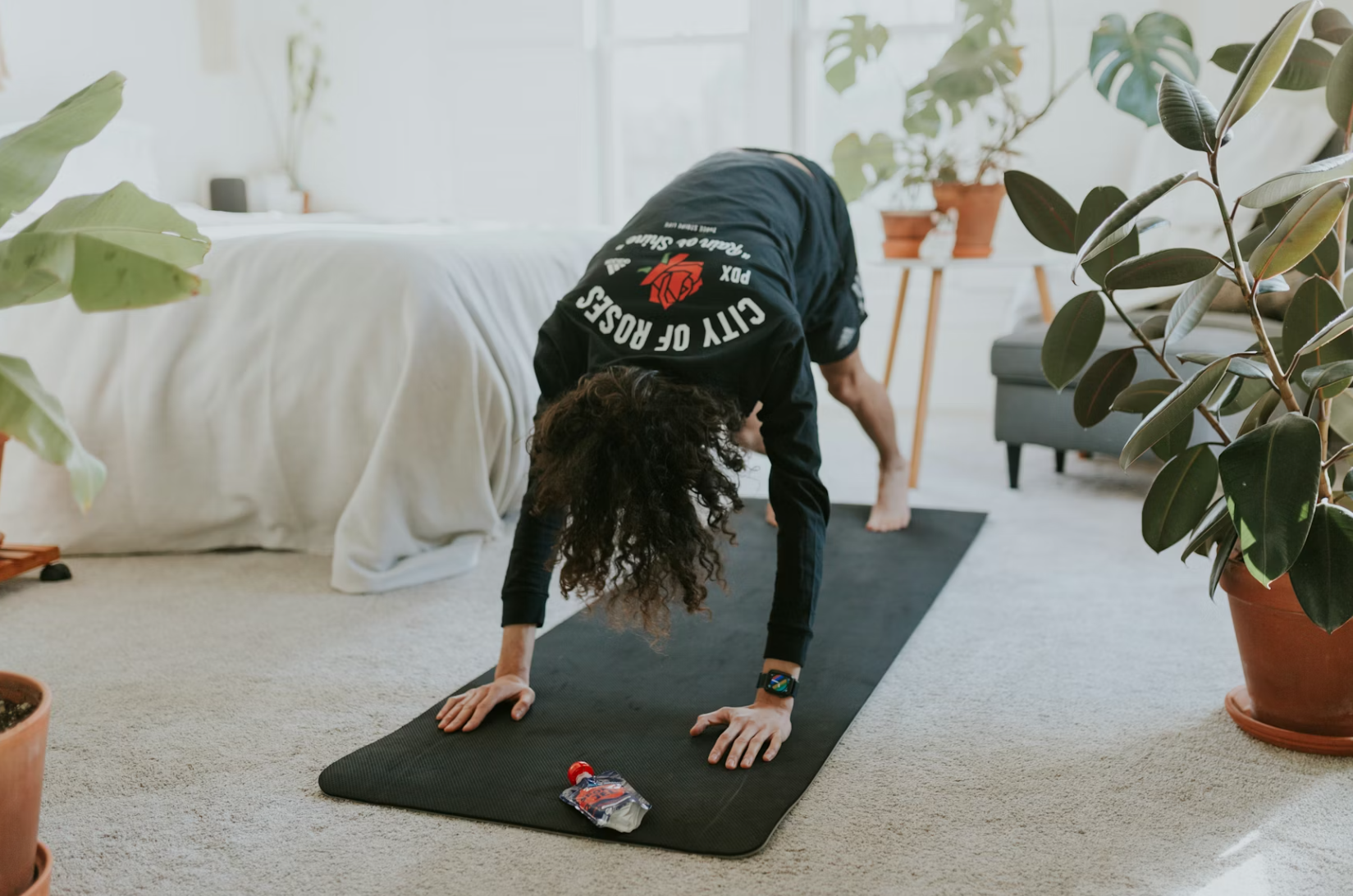
A quality exercise mat is one of the most useful purchases for beginners. It supports floor exercises, stretching, yoga, Pilates-style movements, warmups, cooldowns, and core training. It also creates a psychological boundary. When the mat is rolled out, your workout has begun.
When choosing a mat, pay attention to thickness, grip, size, and durability. A very thin mat may be fine for yoga balance poses but uncomfortable for knees and elbows during beginner strength work. A very thick foam mat may feel soft but unstable during standing exercises. Many beginners do well with a medium-thickness mat that offers cushioning without feeling wobbly.
Grip is important, especially if your hands sweat or your floor is smooth. A slippery mat can make planks, lunges, and stretching uncomfortable or unsafe. Look for a surface that stays in place and is easy to clean. If you plan to do mostly floor workouts, a wider mat may feel more comfortable. If you plan to store it in a small apartment, choose one that rolls easily and does not take up much space.
Resistance Bands for Strength Without Bulk
Resistance bands are a smart beginner workout essential because they are affordable, compact, and surprisingly versatile. They can support upper-body, lower-body, and core exercises without requiring heavy weights or large storage space. For beginners, they are especially helpful because resistance can be adjusted by changing band tension, hand position, or range of motion.
There are several types of bands. Loop bands are often used for glute bridges, squats, side steps, and hip stability work. Long resistance bands with or without handles can be used for rows, presses, curls, and assisted stretching. Fabric bands may feel more comfortable for lower-body exercises, while latex or rubber bands often provide more variety in resistance levels.
When buying bands, consider getting a set with multiple resistance levels. Starting too heavy can make movements feel awkward and may encourage poor form. Starting too light may not provide enough challenge over time. A range of light, medium, and stronger resistance gives you room to progress.
Check the material quality before use. Bands should feel smooth, flexible, and free from cracks or weak spots. Since bands stretch under tension, inspect them regularly and avoid anchoring them to sharp edges.
Beginner-Friendly Dumbbells
Dumbbells are not required for every beginner, but they are useful if you want to build strength at home. A simple pair can be used for squats, deadlifts, presses, rows, curls, lunges, and many other movements. They also make progression easier because you can gradually increase weight as exercises become more comfortable.
For beginners, the best dumbbells are comfortable to hold, stable on the floor, and appropriate for your current ability. Adjustable dumbbells save space and offer flexibility, but they can be more expensive and may feel bulky during some exercises. Fixed dumbbells are simple and easy to use, though you may eventually need more than one pair.
A common mistake is buying weights that are too heavy because they seem more serious. Good strength training is not about struggling through every repetition. It is about controlled movement, safe form, and gradual progress. If you are unsure, start lighter and focus on technique. You can always increase resistance later.
For small spaces, consider neoprene-coated or rubber-coated dumbbells because they are easier to grip and less likely to scratch floors. A small rack or storage bin can keep them from becoming clutter.
A Stable Chair or Bench Alternative
Many beginner home workouts use a chair for support, balance, step-back movements, seated exercises, and modified strength training. You do not always need a workout bench at first. A sturdy dining chair or low bench can be enough for triceps dips, seated shoulder presses, incline push-ups, sit-to-stand squats, and balance support.
The key word is sturdy. Avoid chairs with wheels, folding chairs that wobble, or lightweight furniture that slides easily. Place the chair on a stable surface and test it before exercising. If you plan to use a chair often, choose one with a firm seat and a backrest that allows support without getting in the way.
A bench can be useful later if you become more interested in strength training, but for many beginners, household furniture can serve the purpose until you know what type of workouts you enjoy most.
Comfortable Workout Clothing
Workout clothing does not need to be expensive or trend-driven, but it should help you move comfortably. The best beginner workout clothes are breathable, flexible, and not distracting. If you constantly adjust your waistband, sleeves, or neckline, your workout becomes less enjoyable.
Choose fabrics that manage sweat better than heavy cotton, especially for cardio or warm environments. Stretch matters for squats, lunges, yoga, and floor exercises. Clothes should fit close enough that they do not get caught during movement but not so tight that they limit your range of motion.
Supportive activewear can also improve confidence. When you feel prepared, it is easier to take your routine seriously. For many people, changing into workout clothes creates a small but powerful mental shift from ordinary home time to intentional movement time.
Supportive Shoes, or Barefoot When Appropriate
Shoes depend on the workout style. For strength training, low-impact cardio, dance workouts, or circuit training, supportive athletic shoes can improve comfort and stability. Look for shoes with good grip, a secure fit, and enough cushioning for your floor surface.
Running shoes are designed for forward movement, so they may not always be ideal for side-to-side training or strength workouts. Cross-training shoes are often more versatile for home workouts because they support a mix of movements. However, if you are doing yoga, Pilates, mobility, or controlled mat exercises, barefoot training may be more appropriate.
The main rule is to match footwear to movement. If you are jumping or stepping quickly, protect your feet and joints with proper shoes. If you are focusing on balance and mat work, barefoot or grip socks may give you better floor connection.
A Water Bottle and Towel
Hydration and comfort may sound basic, but they are part of a successful workout environment. Keeping a water bottle nearby prevents unnecessary interruptions and encourages better habits. A towel is useful for sweat, cushioning knees in certain positions, or improving grip during floor work.
Beginners sometimes underestimate how small details affect consistency. If you have to leave the room several times to find water, adjust the air conditioning, or grab a towel, your workout rhythm breaks. Preparing these simple items before you begin helps the session feel smoother.
A Timer or Fitness App
You do not need advanced technology to exercise at home, but a timer is extremely useful. Many beginner routines use intervals, rest periods, or circuit formats. A phone timer, fitness app, or smartwatch can help you stay focused without constantly checking the clock.
Fitness apps can also provide structure, especially if you are unsure what to do. Look for beginner-friendly programs with clear instructions, realistic pacing, and options for modification. Avoid plans that promise dramatic results in very short periods or push intensity before technique.
Video workouts can be helpful, but choose instructors who explain form and offer lower-impact alternatives. A good beginner workout should make you feel guided, not rushed or embarrassed.
Optional Equipment Worth Considering Later
Once you build consistency, you may want to add a few extras. A jump rope can be useful for cardio if you have enough space and a suitable floor. A kettlebell can support strength and conditioning, though beginners should learn proper form before using it heavily. A foam roller can support recovery and mobility, especially if you feel tight after workouts.
Ankle weights, sliders, pull-up bars, and balance tools can be useful for specific goals, but they are not necessary at the start. The smartest approach is to buy based on your routine, not on what looks impressive online. Let your habits reveal what equipment you actually need.
How to Build a Beginner Home Workout Kit
A balanced starter kit could include an exercise mat, a set of resistance bands, one or two pairs of light dumbbells, a water bottle, a towel, and comfortable clothing. This is enough for strength, mobility, stretching, and low-impact conditioning.
If your budget is limited, start with the mat and bands. These two items offer the most versatility for the lowest space commitment. Add dumbbells when you are ready for more strength training. If space is limited, choose items that store vertically, fold, or fit into a basket.
Think of your home workout setup as a capsule wardrobe for fitness. A few reliable essentials that mix well together are better than many pieces you rarely use. The goal is not to own more equipment. The goal is to remove friction from exercise.
Common Mistakes Beginners Should Avoid
One of the biggest mistakes is buying too much equipment too soon. Motivation is high at the beginning, and it is easy to imagine a complete home gym changing everything. But equipment does not create consistency by itself. Start small, learn what you enjoy, and upgrade slowly.
Another mistake is choosing workouts that are too intense. Beginners often think a workout must feel exhausting to be effective. In reality, soreness and fatigue are not the only signs of progress. A good beginner routine should challenge you while still allowing recovery and repeatability.
Poor form is another common issue. When exercising at home, there may be no trainer watching your movement. Choose slower, controlled exercises and pay attention to alignment. Use mirrors when helpful, follow clear instruction, and stop if something feels sharp or unusual.
Many people also skip warmups and cooldowns. A few minutes of gentle movement before training helps your body prepare. A calm cooldown with stretching or breathing can make the workout feel complete and reduce the temptation to rush away.
Finally, avoid comparing your setup to what you see online. Social media fitness spaces are often designed to look perfect. Your home workout area only needs to be safe, useful, and realistic for your life.
What to Look for When Buying Home Workout Essentials
Good beginner equipment should be durable, easy to clean, comfortable to use, and suitable for your current level. Read product descriptions carefully and pay attention to dimensions, materials, weight range, and storage needs.
For mats, look at thickness and grip. For bands, check resistance levels and material quality. For dumbbells, consider handle comfort and floor protection. For clothing and shoes, focus on movement and support rather than appearance alone.
Reviews can be useful, but read them with context. A product that works well for advanced athletes may not be ideal for beginners. Look for comments from people with similar goals, space limitations, or workout styles. Also consider return policies, especially for shoes or equipment where comfort is personal.
A Smarter Way to Start Your Routine
Once your essentials are ready, begin with a simple weekly rhythm. For example, you might do two strength sessions, one mobility session, and one low-impact cardio session each week. Keep workouts short enough that they feel manageable. Even fifteen to thirty minutes can be meaningful when done consistently.
A beginner session might include a warmup, a few bodyweight movements, resistance band exercises, light dumbbell work, and stretching. Over time, you can add repetitions, increase resistance, or try more challenging variations.
Track your workouts in a simple notebook or app. You do not need complicated data. Recording what you did helps you see progress and makes it easier to continue. Progress may look like better balance, more energy, smoother movement, improved strength, or simply showing up more often.
Conclusion
Home workout essentials for beginners should make exercise easier to start, safer to perform, and more enjoyable to repeat. You do not need a large budget, a perfect room, or advanced equipment. A clear space, a supportive mat, resistance bands, suitable clothing, and a few simple tools can create a strong foundation for long-term fitness.
The most important investment is not the equipment itself, but the routine it helps you build. Choose items that match your goals, fit your space, and encourage consistent movement. Start small, move with care, and let your home workout setup grow naturally as your confidence grows.
FAQs
What equipment does a beginner need for home workouts?
Most beginners can start with an exercise mat, resistance bands, comfortable workout clothes, a water bottle, and a towel. Light dumbbells are helpful if you want to add strength training, but they are not required on day one.
Are resistance bands enough for beginners?
Yes, resistance bands can be enough for many beginner routines. They support strength, mobility, and controlled movement while taking up very little space. As you progress, you can add dumbbells or other equipment for more variety.
How much space do I need for a home workout?
You usually need enough room to lie down on a mat, stretch your arms, and step forward, backward, and sideways safely. A small living room corner or bedroom area can work if it is clear of clutter and stable underfoot.
Should beginners buy dumbbells or adjustable weights?
Beginners who have enough space and budget may enjoy adjustable weights, but fixed light dumbbells are often simpler and easier to use. Start with weights you can control comfortably, then add heavier options as your strength improves.
How often should beginners work out at home?
Many beginners do well with three to four sessions per week, depending on fitness level and recovery. Start with manageable workouts and include rest days. Consistency matters more than doing long or intense workouts immediately.

You May Also Like
How to Choose the Right Fitness Gear for Home Workouts
How to Choose Fitness Products That Match Your Goals