Hair Care Routine for Beginners: What Actually Matters?
Starting a hair care routine can feel strangely overwhelming. One minute you simply want your hair to look cleaner, softer, or easier to manage. The next, you are surrounded by leave-in conditioners, scalp scrubs, bonding treatments, heat protectants, hair oils, masks, clarifying shampoos, satin pillowcases, and advice that seems to change depending on who is talking.
The truth is much calmer than the beauty aisle suggests. A good beginner hair care routine does not need to be complicated, expensive, or packed with ten different products. What matters most is understanding your hair, treating your scalp with respect, washing with intention, protecting your strands from unnecessary damage, and building habits you can actually maintain.
Hair care is less like a dramatic makeover and more like caring for a favorite fabric. Silk, linen, denim, and wool all need different handling. Hair works the same way. Fine, oily hair may need a different routine from thick, dry, curly, bleached, or heat-styled hair. The goal is not to follow every trend. The goal is to create a simple routine that supports your real hair in your real life.
What a Beginner Hair Care Routine Should Actually Do
A beginner routine should focus on three things: keeping the scalp clean, keeping the hair strands conditioned, and reducing damage over time. Everything else is secondary.
Your scalp is skin, and like the skin on your face, it can collect oil, sweat, styling residue, and environmental buildup. If the scalp is not cleaned well enough, hair may feel greasy, flat, itchy, or heavy. On the other hand, washing too aggressively or using products that feel too harsh can leave the scalp tight and the hair dry.
Your hair strands are different from your scalp. They do not repair themselves the way skin does. Once the outer layer of the hair is damaged by heat, friction, chemical treatments, or rough brushing, the goal becomes managing and protecting the strand rather than truly reversing the damage. This is why prevention matters so much in hair care.
A smart routine is not about chasing perfection. It is about creating a balance between cleansing, conditioning, and protection.
Step One: Understand Your Hair Type and Hair Needs
Before buying products, take a quiet look at your hair. Is it fine or thick? Straight, wavy, curly, or coily? Does it get oily quickly at the roots? Do the ends feel dry? Is it color-treated, bleached, relaxed, or heat-styled often? Does it tangle easily? Does it feel limp after rich products?
Hair type is not a rigid rulebook, but it gives useful clues. Fine hair often gets weighed down easily and may prefer lighter conditioners and styling products. Thick or coarse hair may need richer moisture and more detangling support. Curly and coily hair often benefits from extra conditioning, gentle handling, and products that help define texture. Color-treated or chemically processed hair usually needs more protection because it is often more fragile.
The key is to separate scalp needs from strand needs. Your roots may be oily while your ends are dry. This is very common. In that case, you do not need to punish your entire head with harsh shampoo or coat your scalp in heavy conditioner. You can cleanse the scalp well and condition mainly through the mid-lengths and ends.
This simple distinction can improve your routine more than buying a shelf full of products.
The Core Products That Matter Most
For beginners, the most useful routine usually includes a shampoo, a conditioner, and a leave-in or styling product if your hair needs extra control. If you use heat tools, a heat protectant becomes essential. If your hair is dry or damaged, a weekly mask may help. That is enough for most people.
A shampoo should clean your scalp without leaving your hair feeling stripped or squeaky in a harsh way. A conditioner should make the lengths easier to detangle and leave the hair feeling smoother. A leave-in conditioner, cream, mousse, or light serum can help with frizz, definition, softness, or manageability depending on your hair type.
More products do not automatically mean better hair. In fact, too many products can cause buildup, heaviness, dullness, and confusion. Beginners are better served by starting with a small routine and adjusting one product at a time.
How Often Should You Wash Your Hair?
There is no universal washing schedule that works for everyone. Some people need to wash daily because their scalp gets oily quickly or because they sweat often. Others wash two or three times a week. Curly, coily, dry, or textured hair may often go longer between wash days, especially when the scalp feels comfortable and the hair remains manageable.
A better question is: what does your scalp need? If your scalp feels greasy, itchy, sweaty, or coated, it is probably time to wash. If your hair still feels fresh and your scalp feels balanced, you may not need to wash just because a calendar says so.
One common beginner mistake is treating dry shampoo as a replacement for washing. Dry shampoo can be useful for refreshing roots, but it does not truly cleanse the scalp. Used too often, it can add more buildup. Think of it as a short-term refresh, not a long-term routine.
If you are unsure, start with washing every two to three days and adjust based on how your scalp and hair respond.
How to Shampoo the Right Way
Shampoo belongs mainly on the scalp, not the ends. The roots are where oil and buildup collect, while the ends are usually the driest and most fragile part of the hair.
Wet your hair thoroughly before applying shampoo. Use a modest amount, then massage it into the scalp with your fingertips, not your nails. Focus on the hairline, crown, behind the ears, and nape of the neck, because these areas often collect sweat and oil. Let the shampoo rinse through the lengths as you wash it out. That is usually enough cleansing for the ends.
If you use a lot of styling product, oil, dry shampoo, or live in a place where your hair gets sweaty or polluted, you may occasionally need a second shampoo. The first wash loosens buildup; the second wash cleans more effectively. But this does not need to become a rule for every wash day.
Avoid scrubbing the hair lengths roughly. Wet hair is more vulnerable, and harsh friction can lead to tangles and breakage.
Conditioner Is Not Optional for Most Hair
Conditioner is one of the most important parts of a beginner hair routine because it helps reduce friction. Hair that is easier to detangle is less likely to break during brushing, styling, and drying.
Apply conditioner mainly from the mid-lengths to the ends. If your hair is very dry, thick, curly, or coily, you may bring conditioner closer to the roots, but many people with fine or oily hair prefer to avoid the scalp to prevent flatness.
Let the conditioner sit for a few minutes while you shower. Then gently detangle with your fingers or a wide-tooth comb if your hair type responds well to wet detangling. Rinse thoroughly unless the product is designed to be left in.
The right conditioner should make your hair feel smoother and easier to manage without leaving it coated or heavy. If your hair feels limp soon after washing, your conditioner may be too rich. If your hair still feels rough and tangly, it may be too light or you may need a more moisturizing formula.
The Role of Hair Masks and Deep Conditioners
Hair masks can be helpful, but they are not magic. A mask is usually a richer conditioning treatment designed to improve softness, slip, and manageability. It can be especially useful for dry, frizzy, curly, color-treated, or heat-styled hair.
For beginners, using a mask once a week or every few washes is a reasonable starting point. Apply it after shampooing, leave it on according to the product directions, and rinse well. If your hair is fine or easily weighed down, use it only on the ends or choose a lighter formula.
Avoid the idea that leaving a mask on all day automatically makes it better. Products are designed for specific use times, and more is not always more. Hair care works best when it is consistent, not extreme.
Leave-In Products: Helpful, But Choose Carefully
Leave-in products are where many beginners get lost. There are leave-in conditioners, curl creams, smoothing creams, mousses, gels, oils, serums, sprays, and styling milks. You do not need all of them.
A leave-in conditioner is useful if your hair feels dry, tangles easily, or needs extra softness after washing. A mousse can help add volume or define waves without too much weight. A curl cream can support curl shape and reduce frizz. A gel can provide hold. A serum or oil can smooth the appearance of ends and add shine, but it should usually be used sparingly.
The best beginner approach is to choose one leave-in product based on your main concern. If your hair is frizzy and dry, try a lightweight leave-in conditioner. If your waves fall flat, try mousse. If your curls need definition, try curl cream or gel. If your ends look rough, try a small amount of serum.
Apply less than you think you need. You can always add more, but too much product can make clean hair feel dirty again.
Heat Styling and Why Protection Matters
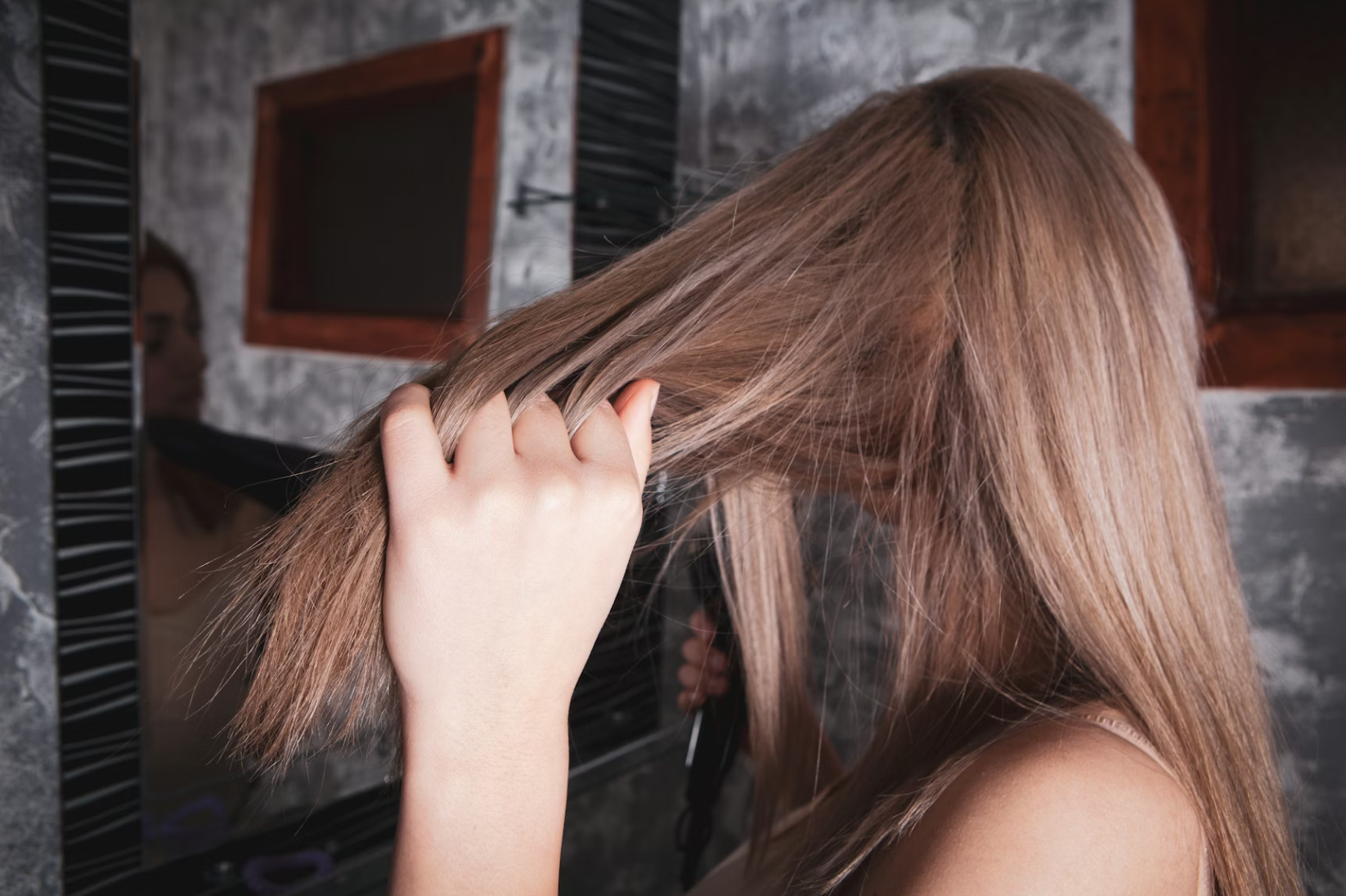
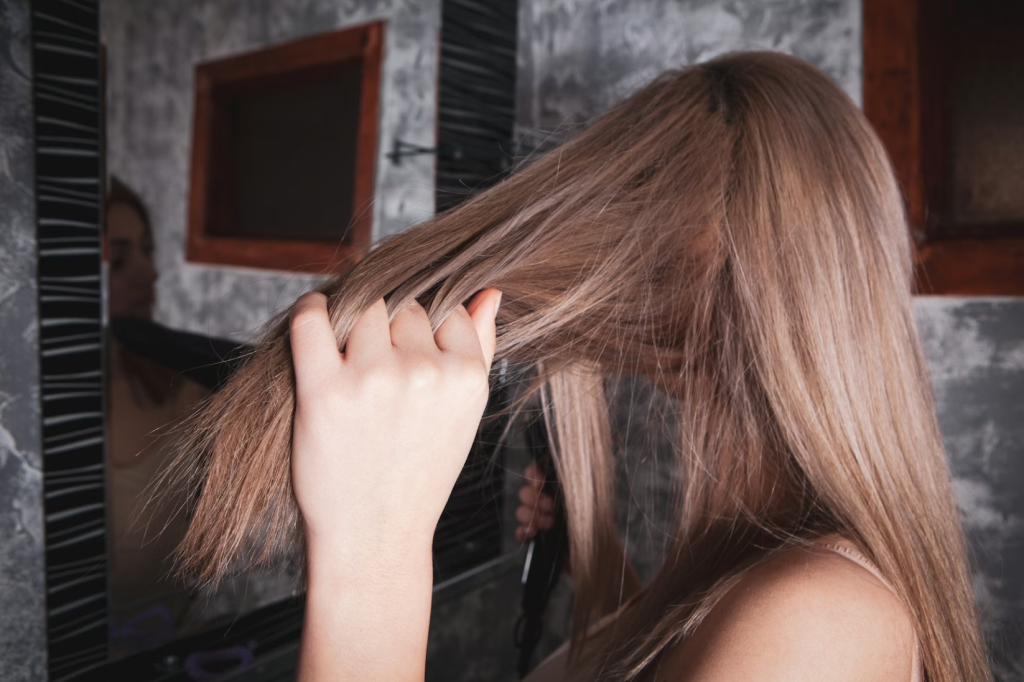
Flat irons, curling wands, hot brushes, and blow dryers can make hair look polished quickly, but heat is one of the most common causes of dryness, split ends, and breakage. This does not mean you must avoid heat completely. It means you should use it thoughtfully.
If you use heat tools, a heat protectant is not optional. Apply it according to the product directions before blow drying, straightening, or curling. Let damp hair dry partially before using high heat, and avoid pressing hot tools over the same section repeatedly.
Try to use the lowest effective temperature for your hair. Fine, fragile, bleached, or damaged hair usually needs less heat than thick or coarse hair. Give your hair heat-free days when possible. Simple changes, such as air-drying partway before blow drying or using overnight styling methods, can reduce stress on the hair over time.
Heat damage often builds slowly. By the time it becomes obvious, the ends may already feel rough, thin, or weak. Prevention is much easier than repair.
Brushing, Detangling, and Everyday Handling
Many hair care problems begin with rough handling. Hair does not need to be treated like glass, but it does respond well to patience.
Start detangling from the ends and work upward. This prevents knots from tightening into bigger tangles. Use a brush or comb suited to your hair type. Wide-tooth combs are often helpful for curly, coily, or wet hair. Detangling brushes can work well for many textures, especially when used gently. Fine hair may prefer a soft brush that does not pull too aggressively.
Be especially careful when hair is wet. Some hair types are best detangled with conditioner in the shower, while others may be easier to brush when damp or dry. Notice what causes the least breakage and discomfort for you.
Friction matters too. Tight hairstyles, rough towels, harsh elastics, and sleeping with loose tangled hair can all contribute to damage. A microfiber towel, soft cotton T-shirt, loose braid, satin scrunchie, or smooth pillowcase may help reduce everyday friction, especially for hair that tangles or frizzes easily.
Scalp Care: Keep It Simple
Scalp care has become a major beauty category, but beginners do not need to overcomplicate it. A healthy-feeling scalp usually starts with regular cleansing, gentle massage, and avoiding product overload at the roots.
If your scalp is oily, focus on cleansing well rather than adding more treatments. If it feels dry or tight, consider whether your shampoo is too strong or whether you are washing too often. If you use styling products, oils, or dry shampoo frequently, a clarifying shampoo used occasionally may help remove buildup.
Scalp scrubs and scalp oils can be useful for some people, but they are not essential for everyone. Scrubs can feel refreshing, but they may be too abrasive if used aggressively. Oils may feel soothing for some hair types, but they can also weigh roots down or create more buildup if not washed out properly.
If you experience persistent itching, flaking, irritation, sores, sudden hair shedding, or scalp discomfort, it is better to seek professional advice rather than trying to solve it with random products. Cosmetic routines are useful, but they are not a substitute for proper care when something feels wrong.
Clarifying Shampoo: When You Actually Need It
Clarifying shampoo is designed to remove heavier buildup from products, oils, minerals, and residue. It can be very helpful, but it should not be used carelessly.
You may benefit from occasional clarifying if your hair feels dull, sticky, unusually heavy, resistant to styling, or greasy even after washing. Swimmers, frequent dry shampoo users, heavy styling product users, and people in hard water areas may also find it useful.
For most beginners, clarifying once or twice a month is enough. Some may need it more often, while dry or color-treated hair may need it less often. Always follow with conditioner, because clarifying formulas can leave the hair feeling drier than usual.
Think of clarifying as a reset button, not your everyday shampoo.
Common Hair Care Mistakes Beginners Make
One of the biggest mistakes is buying too many products at once. When you start five new products in the same week, you cannot tell what is helping and what is causing problems. Start small, observe, then adjust.
Another mistake is copying someone else’s routine exactly. A routine that gives one person glossy curls may make another person’s fine hair look flat. Hair content online can be inspiring, but it should not replace your own observations.
Using too much product is also common. More conditioner, oil, cream, or serum does not always mean more softness. Often, it just means buildup. Begin with a small amount and increase only if needed.
Skipping conditioner because the scalp is oily is another mistake. If your roots are oily but ends are dry, apply conditioner only to the lengths. Your hair can need moisture even when your scalp produces plenty of oil.
Finally, many beginners ignore trims. Trimming does not make hair grow faster from the scalp, but it can make the ends look healthier and reduce the appearance of splitting. If your ends are rough, knotty, or see-through, a small trim can make your hair feel easier to manage.
How to Build a Simple Beginner Routine
A practical beginner routine might look like this: shampoo your scalp when it feels oily or dirty, condition your mid-lengths and ends after every wash, use a leave-in product if your hair needs extra softness or control, protect your hair before heat styling, and use a mask or clarifying shampoo occasionally based on need.
That is the foundation. From there, you can personalize.
If your hair is fine and oily, choose lightweight products, avoid heavy oils near the roots, and focus on scalp cleansing. If your hair is dry or frizzy, use a moisturizing conditioner and consider a leave-in. If your hair is curly or coily, prioritize slip, moisture, definition, and gentle detangling. If your hair is bleached or color-treated, be extra careful with heat and rough brushing.
Give your routine time. Hair does not always transform after one wash. A fair trial is usually a few weeks, unless a product causes irritation, heaviness, or obvious problems right away.
What Is Optional in Hair Care?
Not everything popular is necessary. Hair perfume, scalp massagers, bond-building treatments, overnight oils, expensive brushes, pre-shampoo treatments, and specialized styling products can all have a place, but they are not the foundation.
Optional products should solve a clear problem. If your hair already feels clean, soft, and manageable, you do not need to add more steps just because they are trending. A routine that works is not too simple. It is efficient.
This is especially important for affiliate-style shopping decisions. The smartest purchase is not always the most luxurious product. It is the product that fits your hair type, lifestyle, budget, and actual concern.
How to Shop for Hair Care Products More Smartly
When choosing hair care products, look beyond the front label. Words like “hydrating,” “repairing,” “volumizing,” and “smoothing” can be helpful, but they are still marketing terms. Think about what your hair needs in practical terms.
Do you need more moisture, less oil, better detangling, more volume, curl definition, color protection, heat protection, or less frizz? Choose products around one or two main goals instead of trying to fix everything at once.
Texture matters too. Fine hair often prefers sprays, light lotions, or airy formulas. Thick or coarse hair may enjoy creams, butters, or richer masks. Curly hair may need more slip and hold. Oily scalps may prefer shampoos that rinse clean and do not leave residue.
Price does not guarantee performance. Some affordable products work beautifully, and some expensive ones may not suit your hair. Read product descriptions carefully, compare use cases, and avoid buying based only on hype.
A Balanced Final Takeaway
A good beginner hair care routine is not about owning every product or following every rule. It is about learning what your hair is asking for. Cleanse the scalp. Condition the lengths. Protect against heat and friction. Choose products with a purpose. Pay attention to how your hair feels after each step.
The best routine is the one that makes your hair easier to live with. It should fit into your mornings, your wash days, your budget, and your natural texture. When hair care becomes simple and consistent, it starts to feel less like another task and more like a quiet form of self-maintenance.
Conclusion
Hair care for beginners becomes much easier when you focus on what actually matters: scalp cleanliness, strand conditioning, gentle handling, and realistic protection from damage. You do not need a complicated routine to have better-looking, healthier-feeling hair. Start with the basics, observe your hair’s response, and add products only when they serve a clear purpose. Over time, those small, steady choices can make your hair feel softer, cleaner, more manageable, and more like your own.
FAQs
How many products does a beginner hair care routine need?
Most beginners only need a good shampoo, a conditioner, and possibly one leave-in or styling product. If you use hot tools, add a heat protectant. Masks, oils, and clarifying shampoos can be useful later, but they are not required for everyone.
Is it bad to wash my hair every day?
Daily washing is not automatically bad. It depends on your scalp, lifestyle, and hair type. If your scalp gets oily or sweaty every day, daily washing with a suitable shampoo may work well. If your hair feels dry or brittle, you may benefit from washing less often or using a gentler formula.
Should conditioner be applied to the scalp?
For many people, conditioner works best on the mid-lengths and ends, especially if the scalp is oily or the hair is fine. However, very dry, thick, curly, or coily hair may tolerate conditioner closer to the roots. The right approach depends on how your hair responds.
Do I really need a heat protectant?
If you use blow dryers, straighteners, curling irons, or hot brushes, a heat protectant is strongly recommended. It helps reduce the stress caused by heat styling, although it does not make hair completely damage-proof. Lower heat and fewer passes also matter.
How long does it take to know if a hair routine is working?
You may notice softness and manageability after one wash, but a routine usually needs a few weeks to judge properly. If a product causes irritation, heavy buildup, or makes your hair feel worse right away, stop using it and reassess.

You May Also Like

The Beauty of a Routine That Knows When to Stop

Sensitive Skin Buying Guide: What to Avoid and What to Choose